


Convertible furniture for small accessible apartments has become a hot topic as more people search for creative ways to make compact living spaces more functional without sacrificing accessibility. Whether you’re adapting existing pieces or shopping for adaptive solutions, finding the right balance between space-saving design and true wheelchair usability is more challenging than it first appears.
Key Takeaways
- Very few convertible furniture options designed for small apartments are rated as fully wheelchair accessible, even in 2024.
- Most complaints center around furniture that blocks wheelchair paths, has heavy components, or lacks appropriate clearance and usability features.
- Simple product swaps and layout tweaks can dramatically improve accessibility in tight spaces, but true adaptive furniture often requires custom solutions.
The Core Concept: What Is Convertible Furniture for Small Accessible Apartments?
Convertible furniture for small accessible apartments refers to cleverly designed pieces that serve multiple purposes—like a sofa that quickly becomes a bed, or a coffee table that lifts into a desk—all while considering maneuverability and accessibility for wheelchair users. The core goal is to maximize available space and daily independence without cluttering crucial pathways or making items hard to use.
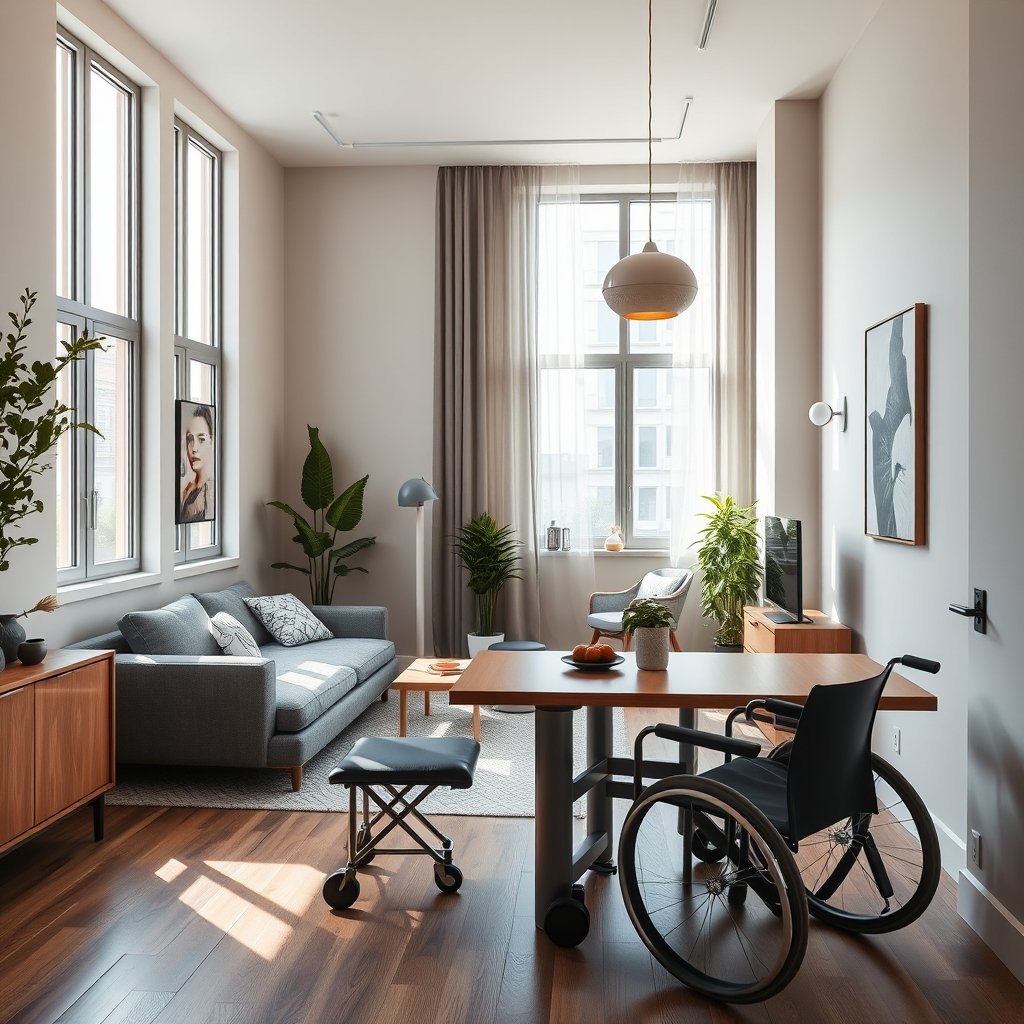
Unlike standard space-saving furniture, truly accessible convertible pieces need to account for seat transfer clearances, lever reach, table heights, and the force required for adjustments. Unfortunately, most products on the market today focus only on saving space, not on meeting these critical adaptive benchmarks. For more on the importance of clearances and accessible features, see our guide on accessible apartment layout tips.
Step-by-Step Guide: How to Set Up Convertible Furniture for Small Accessible Apartments
Adapting your apartment for wheelchair accessibility while maintaining flexibility is not just about shopping for the right furniture. It’s about strategy, measurement, and prioritizing real needs over clever marketing. Here’s how to approach it:
-
Audit Your Real Needs.
Create a list of what functions your furniture must serve—sleeping, working, relaxing, eating—and prioritize which are must-haves versus nice-to-haves. Consider whether you need things like a bed that folds away, or if simply having under-bed storage is enough.
-
Measure Doorways and Space Around Furniture.
Leave at least 32 inches of straight clearance in main walkways and a 60-inch turning circle if possible. These measurements are based on universal accessibility guidelines but should be customized for your specific wheelchair width and ergonomic needs.
-
Spot Accessibility Blockers in Popular Furniture.
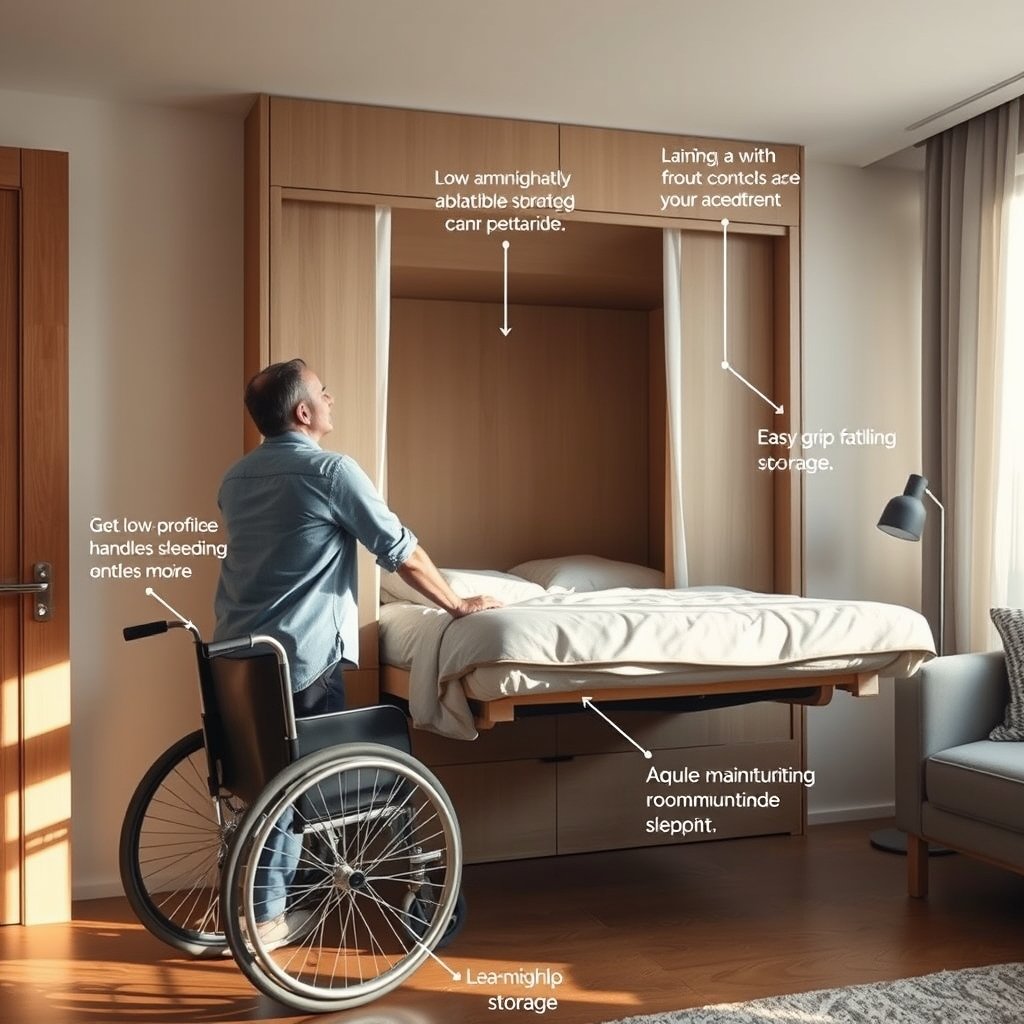
Avoid models requiring two hands to transform or those with heavy moving parts. Many convertible sofas and wobbling coffee tables block essential transfer routes or are hard to operate unaided. Pair up adaptations, like choosing a wall bed with a pull-down strap instead of a stiff latch.
-
Select Multi-functional, Lightweight Options.
Look for items described as “easy-lift” or “one-person operation.” Test mechanisms in-store or via online videos (where available)—what brands call “compact” may be cumbersome in real life. Reference our compact living room design ideas for effective layouts.
-
Adapt Non-Accessible Furniture.
Add lock-down casters to ottomans or fasteners to lightweight storage cubes to prevent unwanted movement while still enabling relocation when needed. Consider removable trays on tables to aid transfer and keep daily-use items within reach.
-
Request User Testimonials or Case Studies.
Ask brands to provide authentic feedback from wheelchair users. For example, see the firsthand experience detailed here: adjustable sofas and rising tables can restore confidence and reduce clutter, especially during temporary injury recovery or for long-term needs.
-
Test Before Committing.
If possible, trial potential furniture for real-world usability. If you’re ordering online, check return policies and look for shops that offer live virtual demos. For more insights, explore our article on wheelchair-friendly small bedroom solutions.
-
Continuously Reassess and Adapt.
As needs change, keep tweaking your adaptive layout. Small additions—like wall hooks for daily transfer aids, or soft-close storage for easier access—can make a big impact over time.
Advanced Analysis & Common Pitfalls
Even with careful planning, several problems keep cropping up for those seeking practical convertible furniture for small accessible apartments. Here’s what the research and firsthand testimonials reveal.
3 Most Overlooked Accessibility Needs
- Lack of True Accessibility Features: Most competitor articles ignore adaptive needs specific to wheelchair transfer and maneuverability. Sofas may fold, but if they block pathways, they aren’t functional for accessibility.
- Manipulation Difficulty: Heavy or high-force latches, fold mechanisms, or dual-hand controls stop many users from being able to use the furniture at all.
- No Attention to Adjustable Heights: Tables and beds that can’t adjust in height or allow for under-clearance frequently prevent users from getting close enough for real utility, especially in kitchens and workspaces.
Common Pitfalls Chart: Accessible vs. Standard Convertible Furniture
| Feature | Standard Convertible Furniture | Accessible/Adaptive Convertible Furniture |
|---|---|---|
| Average Price Range | Under $500 | Custom pricing (often $800+), few off-the-shelf options |
| Wheelchair Transfer Zone | Often blocked or too narrow | Clear 30-36 inch side access, transfer arms |
| Ease of Conversion | Manual, high force, may require two hands | Single-handed, low-force, sometimes with remote/app control (source) |
| Technical Specs (Seat Height, Table Height) | Not specified or standardized | Rare; adaptive tables often 28-34 inches high, but specs not widely disclosed |
| Availability | Abundant—major retailers | Limited—primarily via specialty suppliers |
| Innovations (2022–2024) | Bluetooth/app controls, but not designed for accessibility | Very limited; app-based controls help but do not solve deep accessibility issues |
Real-World Testimonials
One case describes a woman recovering from a hip injury using an adjustable reclining sofa and a lift-up coffee table. These upgrades restored her independence and enabled easier movement around the apartment, as detailed at KGC Access. Another testimony highlights a lift-lower kitchen counter that enabled a wheelchair user to cook jointly with a partner: “the smartest thing we ever did.” However, shortfalls remain—wall-mounted units sometimes require two hands or more strength than the user can consistently provide.
Consumer complaints also echo one recurring issue: lack of documented specs. Most brands do not share seat widths, heights, or clearance dimensions. This makes it difficult to ensure a new purchase will really fit your adaptive needs. Our detailed layouts for modular sofas in small apartments include tips for measurements that work in the real world.

Conclusion
Finding convertible furniture for small accessible apartments that balances space-saving features with real-world accessibility is a challenge—but not an impossible one. Most products on today’s market focus on compact design but fall short of meeting adaptive needs like clear transfer zones, easy controls, and detailed technical specs. If you’re looking for true accessibility, rely on accurate measurements, test products whenever possible, and don’t hesitate to adapt standard items for your own use. For more advice, check out our space-saving bedroom furniture guide and tips for choosing multipurpose furniture. Ready to reclaim your independence and maximize your space? Start mapping your layout and exploring adaptive options now.
FAQ
Are most convertible sofas and beds truly accessible for wheelchair users?
No. Most are designed to save space for the general population, lacking key features such as clear transfer zones, easy-to-use mechanisms, or appropriate seat and bed heights for wheelchair users.
How can I make standard convertible furniture more accessible?
Use add-ons like furniture sliders for heavy items, removable transfer trays, and lock-down casters to help mobility. Clear enough space on at least one side for easy wheelchair approach and adjust heights using risers or blocks if needed.
What technical specs should I look for to ensure accessibility?
Look for a minimum of 32 inches for walkways, 28-34 inch table heights, and clear side access around beds or seating. When information isn’t provided, request it from the manufacturer or test in person.
What are the main pain points for wheelchair users in small apartments?
Common issues include blocked transfer routes, heavy or difficult-to-move pieces, controls that require two hands or significant force, and lack of transparent sizing or measurement information.
Where can I find real-world testimonials about accessible convertible furniture?
Check specialty accessibility blogs like KGC Access for firsthand user stories and case studies.